Dubai's desert is one of the world's most photogenic landscapes. The red-gold dunes of the Arabian desert shift and ripple, catch light in ways that make every frame look painted, and offer subjects — camels, Bedouin culture, quad bikes cresting ridges — that no other destination can match. Whether you shoot on a smartphone or a full-frame camera, this guide will help you return home with images you are genuinely proud of.
Timing Is Everything: The Golden Hour Advantage
The most important photography decision you make is when you go into the desert. The Dubai sun at midday is brutal and flat — it bleaches colour from the sand and creates harsh shadows. The magic window is the 60 minutes surrounding sunset (or sunrise for morning safari guests).
During golden hour:
- Dune ripples cast deep, dramatic shadows that reveal the texture of the sand
- The entire landscape shifts to warm amber and terracotta tones
- The sky becomes a canvas of orange, pink, and violet
- Any person, camel, or vehicle silhouetted against the horizon becomes a striking subject
A shared desert safari positions you in the dunes at exactly this time. If photography is your primary goal, this is the experience to choose.
Essential Gear for Desert Photography
Camera and Lenses
- Versatile zoom (24–105mm or 18–135mm): Handles landscapes, people, and action in one lens — invaluable when you do not have time to swap between shots
- Wide-angle lens (16–24mm): Exaggerates dune scale, makes the desert feel truly vast
- Telephoto (70–200mm): Compresses perspective beautifully for camel trains across a ridge or distant dune-bashing action shots
Protecting Your Gear from Sand
Sand is the enemy of camera equipment. A single grain in the wrong place can scratch a sensor or jam a zoom ring permanently.
- UV/protective filter: Always leave one on your lens — it is far cheaper to replace than the front element
- Lens cloth and blower: Essential for clearing dust between shots
- Dry bag or camera insert: Protects gear during dune bashing when vibration and dust are at their worst
- Lens cap discipline: Keep caps on whenever you are not actively shooting
Key Shots to Plan For
1. The Golden Dune Ripple
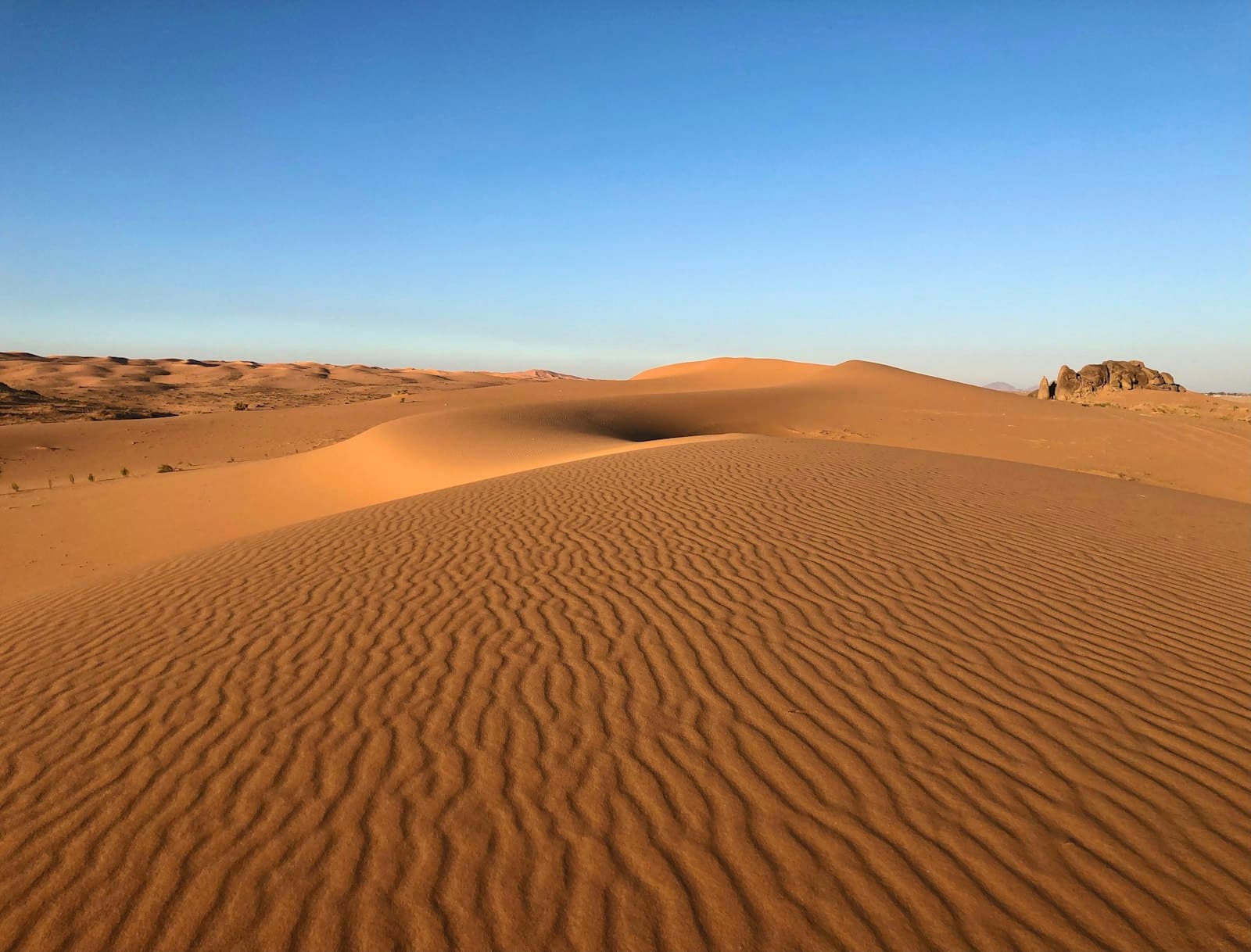
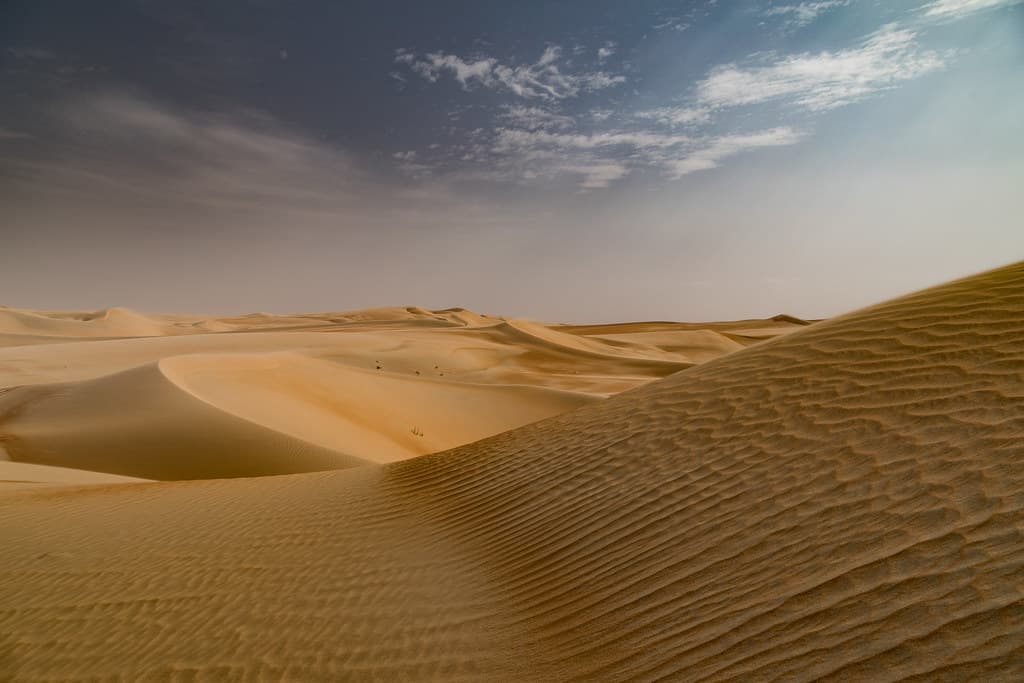
Find a dune face catching side-light and fill the frame with the textured surface. Use a small aperture (f/8–f/11) and focus one-third into the frame for maximum sharpness.
2. The Silhouette
Position a camel, person, or Land Cruiser against the lit sky at the crest of a dune. Expose for the sky, let the foreground go dark, and the result is a timeless shot.
3. Dune Bashing Action
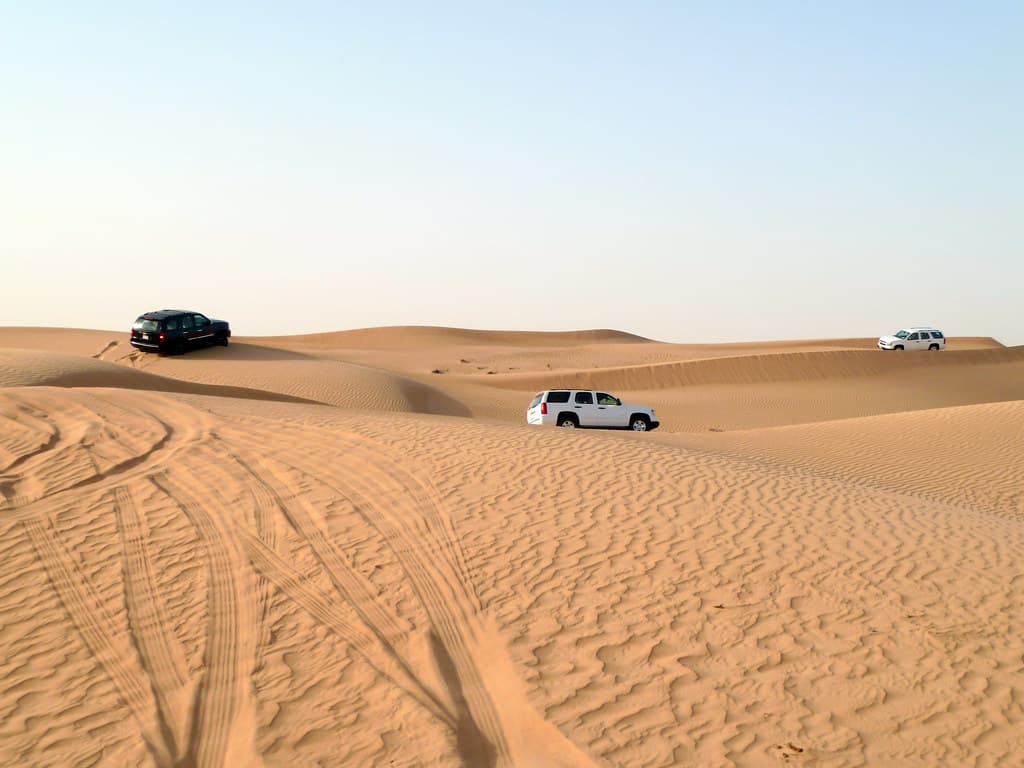
Set your camera to continuous burst and shutter priority (1/800s or faster) to freeze a Land Cruiser mid-crest. The moment all four wheels leave the ridge is the peak action frame.
4. Camel Portraits
Get low — crouch or even lie on the sand. Shooting up toward a camel's face with a wide-angle lens creates a characterful portrait with dunes in the background. Early morning or late afternoon light produces the warmest skin tones on the camel's coat.
5. Camp Life and Culture
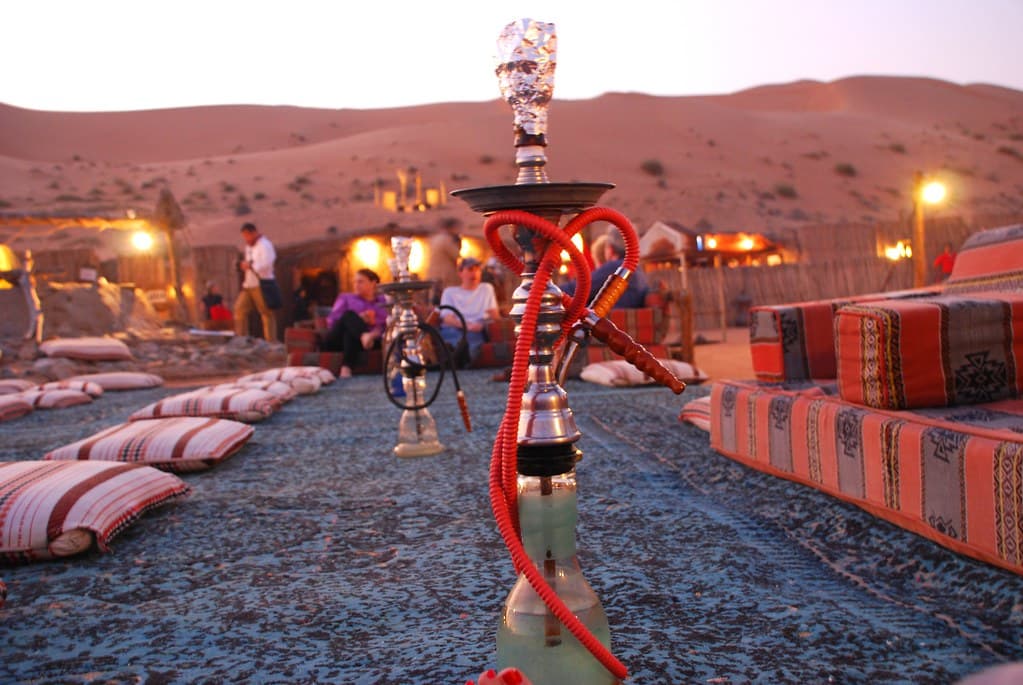
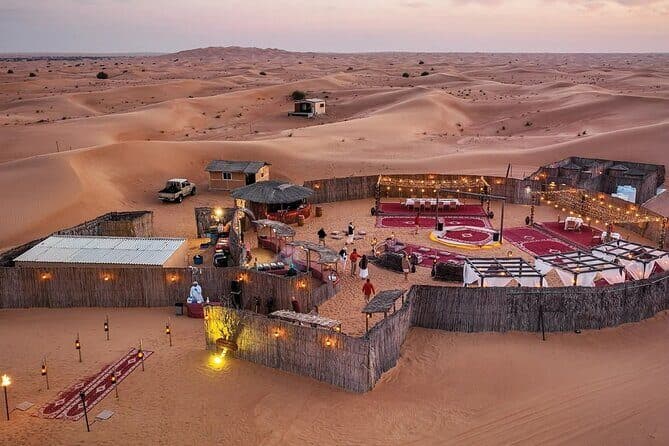
The Bedouin camp that follows dune bashing is rich with detail shots: henna hands, glowing lanterns, the texture of a woven rug, smoke rising from a shisha pipe. These intimate images tell the story of the full desert experience.
Composition Tips for Dune Landscapes
Use the rule of thirds: Place the horizon on the lower third of the frame to emphasise dramatic skies, or on the upper third to showcase the foreground dune textures.
Lead the eye with ridgelines: Dune ridges are natural leading lines. Find an S-curve or diagonal ridge and let it draw the viewer's gaze into the frame.
Include a human element for scale: The desert feels genuinely vast only when you show how small a person looks within it. Ask your guide to walk to the crest of a distant dune while you photograph from below.
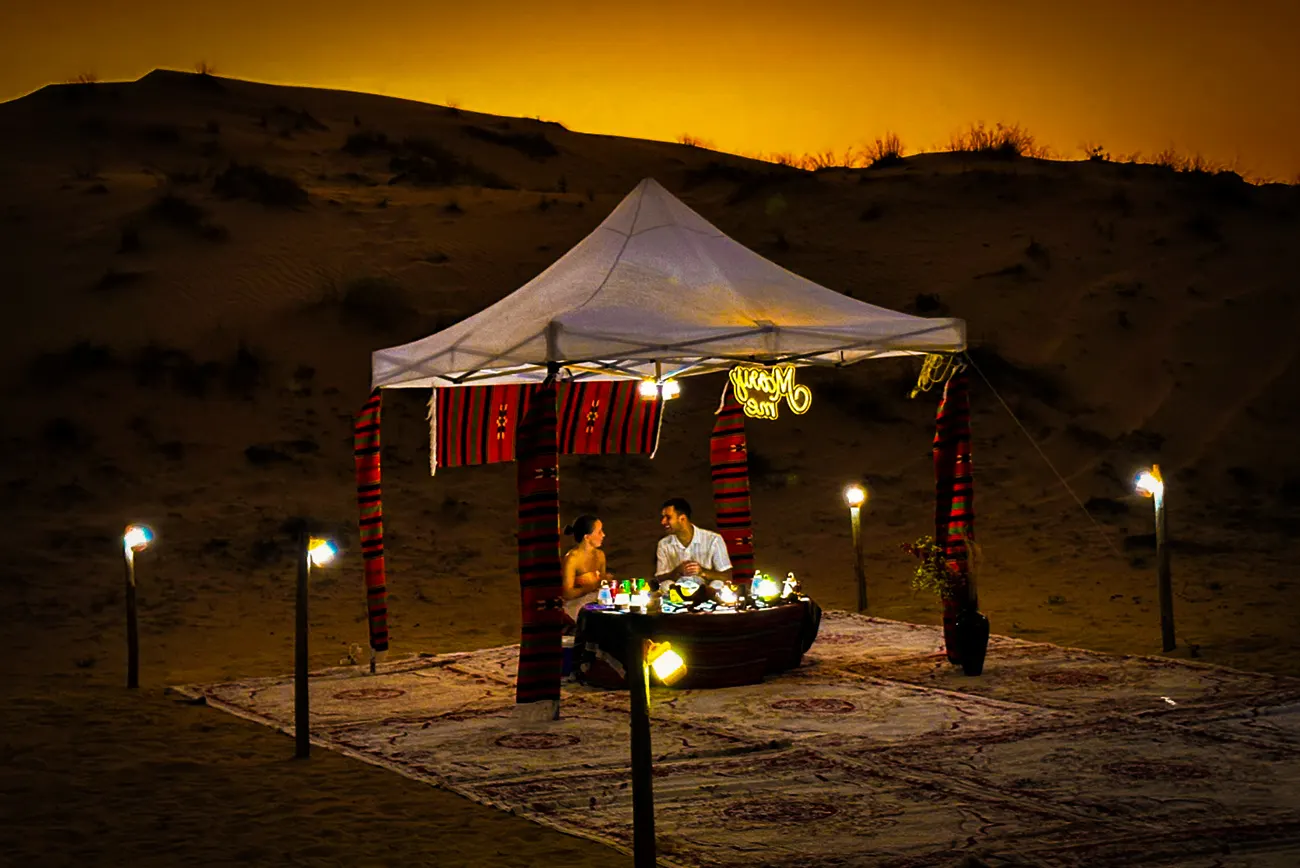
Experiment with long exposures at camp: Once the sun sets, set your camera on a bag or improvised support and try 15–30 second exposures of the fire performers, capturing light trails as they spin.
Photography on a Private VIP Safari
For dedicated photographers, a VIP Bedouin Camp safari is the clear choice. You control the schedule — linger at a dune that is catching perfect light, ask the driver to position the vehicle for a specific shot, or request a route to quieter, untracked dunes with pristine ripples.
Private safaris also allow you to plan your timeline precisely around sunset, ensuring you are at the highest dune when the golden hour peaks.
Capture the Arabian desert at its most spectacular. Book your shared or VIP safari with MyDubaiSafari and take home photographs that tell the story of Dubai's most breathtaking landscape.